Getting Comfortable with the Discomfort of Change
Discomfort is necessary for real change
When you are a change expert do people expect you to navigate change effortlessly? That was the question Stephanie Staples, host of the radio show Your Life Unlimited, asked when she was interviewing me about my book Launch Lead Live. The short answer was yes, people think because I’m immersed in change it’s somehow easier. The truth is I also find change uncomfortable. Discomfort is a necessary and normal part of real change. Read more
The Paradox of Change Management
Save time and Resources: Build Readiness
(excerpt from Launch Lead Live: The Executive’s Guide to Preventing Resistance and Succeeding with Organizational Change)
Time is an issue in every organization. Initially, if you are used to working from a resistance perspective, it can feel like it takes longer to get people ready. It doesn’t. Consider the time and energy you must spend trying to enforce compliance when you use the traditional “resistance” approach.
By focusing on building readiness instead of managing resistance, and emphasizing the needs of the change-recipients, you can actually make better use of your time and resources. You can also get a greater return on your investment.
The traditional approach to organizational change (figure 1) looks to move quickly to training and implementation.
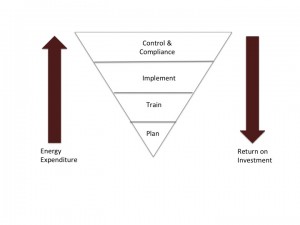
Figure 1 Common Approach to Organizational Change
Turner Change Management Inc.
It tries to minimize the amount of time spent in the early period; the majority of the effort is at the back end of the change. This approach gives the appearance of saving time, but it top loads issues so that they emerge right around the time of implementation– when time and resources are at a premium.
You expend more energy and resources, but the return on that energy decreases as people move through the Whitespace. It’s like heating your house in the winter while leaving the all the windows open.
This kind of back-end approach forces you to manage the resistance created when the change-recipients are pushed into taking action before they are ready. The approach gives the perception of speed, while actually taking more time. I call this the paradox of change management.
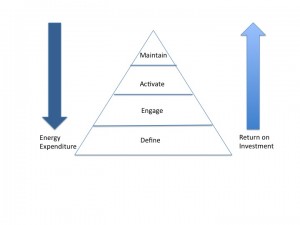
Figure 2 Change-Recipient Readiness Approach
Building readiness shifts the effort to the front end of the Event. Time is allocated to ensure the change-recipients can internalize the need, raise perceived capability, prepare, and support people through the transition. The change is built on a stable foundation. This results in a more sustainable change (Figure 2).
 https://thinktransition.com/wp-content/uploads/Systems-thinking.jpg
720
1280
Amanda Turner
https://thinktransition.com/wp-content/uploads/Turner-Change-Management-logo-1.jpg
Amanda Turner2026-02-12 08:00:012026-02-12 16:07:16Think Systems for Organizational Growth and Sustainable Change
https://thinktransition.com/wp-content/uploads/Systems-thinking.jpg
720
1280
Amanda Turner
https://thinktransition.com/wp-content/uploads/Turner-Change-Management-logo-1.jpg
Amanda Turner2026-02-12 08:00:012026-02-12 16:07:16Think Systems for Organizational Growth and Sustainable Change https://thinktransition.com/wp-content/uploads/You-Actions-Shape-Empoloyee-Opinions99.jpg
1080
1920
Amanda Turner
https://thinktransition.com/wp-content/uploads/Turner-Change-Management-logo-1.jpg
Amanda Turner2026-02-05 08:00:072026-02-04 15:44:04Do Your Actions Demonstrate Your Employees Value.
https://thinktransition.com/wp-content/uploads/You-Actions-Shape-Empoloyee-Opinions99.jpg
1080
1920
Amanda Turner
https://thinktransition.com/wp-content/uploads/Turner-Change-Management-logo-1.jpg
Amanda Turner2026-02-05 08:00:072026-02-04 15:44:04Do Your Actions Demonstrate Your Employees Value. https://thinktransition.com/wp-content/uploads/Thumbnail-35-The-Whitespace69.jpg
1080
1920
Amanda Turner
https://thinktransition.com/wp-content/uploads/Turner-Change-Management-logo-1.jpg
Amanda Turner2026-01-29 08:00:222026-01-28 16:11:0180% of Your Organization’s Success Depends on Navigating the Whitespace
https://thinktransition.com/wp-content/uploads/Thumbnail-35-The-Whitespace69.jpg
1080
1920
Amanda Turner
https://thinktransition.com/wp-content/uploads/Turner-Change-Management-logo-1.jpg
Amanda Turner2026-01-29 08:00:222026-01-28 16:11:0180% of Your Organization’s Success Depends on Navigating the WhitespaceA Different Approach to New Year’s Resolutions
Happy New Year!
Have you made any New Year’s resolutions? I have. Research shows people who make New Year’s resolutions are 10 times more likely to meet their goals than people who don’t make resolutions.*
I used to write one or two goals statements because for me a New Year’s resolution was simply a goal I wanted to achieve for that year. Now I do it a little bit differently. Instead of writing one or two goal statements I think backwards and then create a four-word framework.
For several years I have been using a similar technique (the three words exercise) to help leaders understand the boundaries of the Whitespace when embarking on change. This (three-word) technique is a powerful tool for defining and understanding the full scope of any change initiative. However, until last year I had never thought about adapting the technique for my New Year’s Resolutions. The four-word framework provided a useful way of moving forward while accounting for the existing demands of my daily life and operational environment.
Using the framework gave me more flexibility. I was also able to respond better to new opportunities, and I could re-frame challenges more quickly to help me achieve my intended outcome.
One of the words in my 2015 framework was “learn”. The word represented professional and personal learning that I wanted to accomplish last year. It also guided the way I interacted with the world and reminded me to be open to new learning opportunities. I met my professional learning goals (e.g. WordPress), and opened up new learning opportunities for clients (e.g. The Executive Change Leader Course). I also learned in unexpected ways. For example, I learned and continue to learn different leadership skills as I work with a new (millennial) team member. I also learned more about writing, editing, and myself than I would have imagined when I published my first book.
Three Steps to Creating Your Four-Word New Year’s Resolution Framework
Just picking four words won’t give you a useful framework. Think about it like building a house, before you can frame the house you need to know what type of house you are building. Similarly, before you pick the four words that will define your framework you need an intended outcome. Here are three steps for using the four words technique to create or guide your New Year’s resolutions for 2016:
1. Allocate some time to reflect. Ask, What does your life look and feel like on December 31, 2016? Be clear, concrete, and concise. Write down your responses. This is your intended outcome.
2. Work backwards from your outcome. Keeping your outcome in mind, ask, what activities, behaviours or other aspects of my life are different in the outcome I envision from where I am today?
3. Choose four words that best represent, for you, your intended outcome. Write them down and keep them somewhere you can see them. (I keep mine posted above my keyboard).
Again this year, I have chosen four words that will provide the framework for my 2016 intended outcome. I am looking forward to filling in the framework and achieving my 2016 outcome.
Have you made any New Year’s Resolutions?
Wishing you success and happiness in 2016.
Dr. Dawn-Marie Turner
Helping you turn change from a liability to an asset.
Is your organization change cynical or change-innovative?
Change-Innovative or Change Cynical?
In my book “Launch Lead Live: The Executive’s Guide to Preventing Resistance and Succeeding with Organizational Change,” I explore two types of organizations when it comes to change. The first type of organization is the change-innovative and the second is cynical.
The difference between the change-innovative and the cynical organization
There are significant differences between the change-innovative and the cynical organization. One very important difference is the employees’ view of change. Employees of a change-innovative organization don’t feel a loss of control, nor are they stressed or overwhelmed by change.[1] They are able to move easily through a change with minimal disruption to their daily operation.
Employees of a cynical organization struggle with change. Their focus is on maintaining the current state. Leaders of a cynical organization experience high levels of negativity and skepticism when change is announced.
Another difference between the two types of organizations is their capacity for change. Organizational change capacity is your organization’s ability to implement a single change while maintaining your daily operation and not compromising future change processes.[2] It is critical for successful and sustainable change.
Unlike the change-innovative organization, which has a high level of change capacity, the cynical organization’s change capacity is low. A low level of change capacity creates two problems for the organization. First, the current change being implemented is unlikely to succeed. Second, organizations with low levels of change capacity experience greater disruption to their operation during change. The end result–their ability to implement future changes successfully is reduced.
Every change you implement needs to set your organization up to be successful for the next change. Organizations with high levels of change capacity become stronger, more competitive, and productive with each change they make. Conversely, organizations with low levels of change capacity become weaker, less productive, and employees view each new change with skepticism.
If you’re thinking your organization is more cynical than change-innovative, don’t despair. You can overcome your organization’s negative response to change and create a change-ready organization.
Three things you can do to build a change-innovative organization
Building a change-ready organization takes time. You won’t build a change-innovative organization with one change initiative, but it does start with one change, regardless of its size. Here are three things that can help your organization to become a change-innovative organization:
1. Stop managing resistance and start building people readiness
Readiness is more than just the absence of resistance. “People readiness is the willingness, and the ability of a person to engage in the activities and behaviours necessary for the change to be implemented.”[3] Building readiness requires more of you as a leader, than simply managing resistance. However, it will provide a much greater return on your investment than managing resistance.
2. Adopt a change-recipient centric approach to organizational change
Taking a change-recipient centric approach means that instead of the people affected by the change being passive recipients of the event, they become active participants in creating the desired outcome. Research has demonstrated that although this approach is the least used, it is the most effective.[4]
3. Ensure you have allocated enough time for both dimensions of your change.
Two different but related dimensions define every change, the Event and the Whitespace. If you picture change as an iceberg the Event is the portion of the iceberg above the waterline. The Whitespace is the portion below the waterline.
Similar to an iceberg, the Whitespace of change is bigger, more complex, and takes longer than the Event. However, like the ship’s captain, your success depends on your ability to understand, and navigate its complexity. One of the first things to do when planning for change is to assess the time needed for people to move through the Whitespace. Then ensure you have the activities needed to support their journey.
Fill out the form below if you’d like an assesment on your organization
General Contact Form
____________________________________________
1. Bennebroek Gravenhorst, K. M., Werkman, R., & Boonstra, J. (2003). The Change Capacity of Organizations: General assessment and five configurations. Journal of Applied Psychology, 52(1), 83-105.
2. Meyer, C., & Stensaker, I. (2006). Developing capacity for change. Journal of Change Management, 6(2), 217-231.
3. Turner, D. M. (2015). Launch Lead Live: The executive’s guide to preventing resistance and succeeding with organizational change. Saskatchewan: YNYP.
4. Nutt, P. (1998). Leverage, Resistance and the Success of Implementation Approaches. Journal of Management Studies, 35(2), 213-240.